Voice AI in Healthcare: Revolutionizing Patient Care and Medical Operations
The healthcare industry is experiencing a digital transformation unprecedented in its history, and voice artificial intelligence is at the forefront of this revolution. From reducing physician burnout through automated documentation to providing 24/7 patient support, voice AI is addressing some of healthcare's most pressing challenges while improving patient outcomes and operational efficiency.
This comprehensive exploration examines how voice AI is reshaping healthcare delivery, the specific applications driving change, and what the future holds for this transformative technology.
The Healthcare Challenge Voice AI Addresses
Healthcare systems worldwide face mounting pressures:
- Physician Shortage: A projected shortage of 124,000 physicians by 2034 in the US alone
- Administrative Burden: Physicians spend up to 50% of their time on documentation
- Rising Costs: Healthcare spending continues to outpace GDP growth
- Access Barriers: Rural and underserved populations lack adequate healthcare access
- Patient Expectations: Demand for convenient, personalized healthcare experiences
Voice AI offers solutions that address each of these challenges while maintaining the human touch essential to quality healthcare.
Current Applications of Voice AI in Healthcare
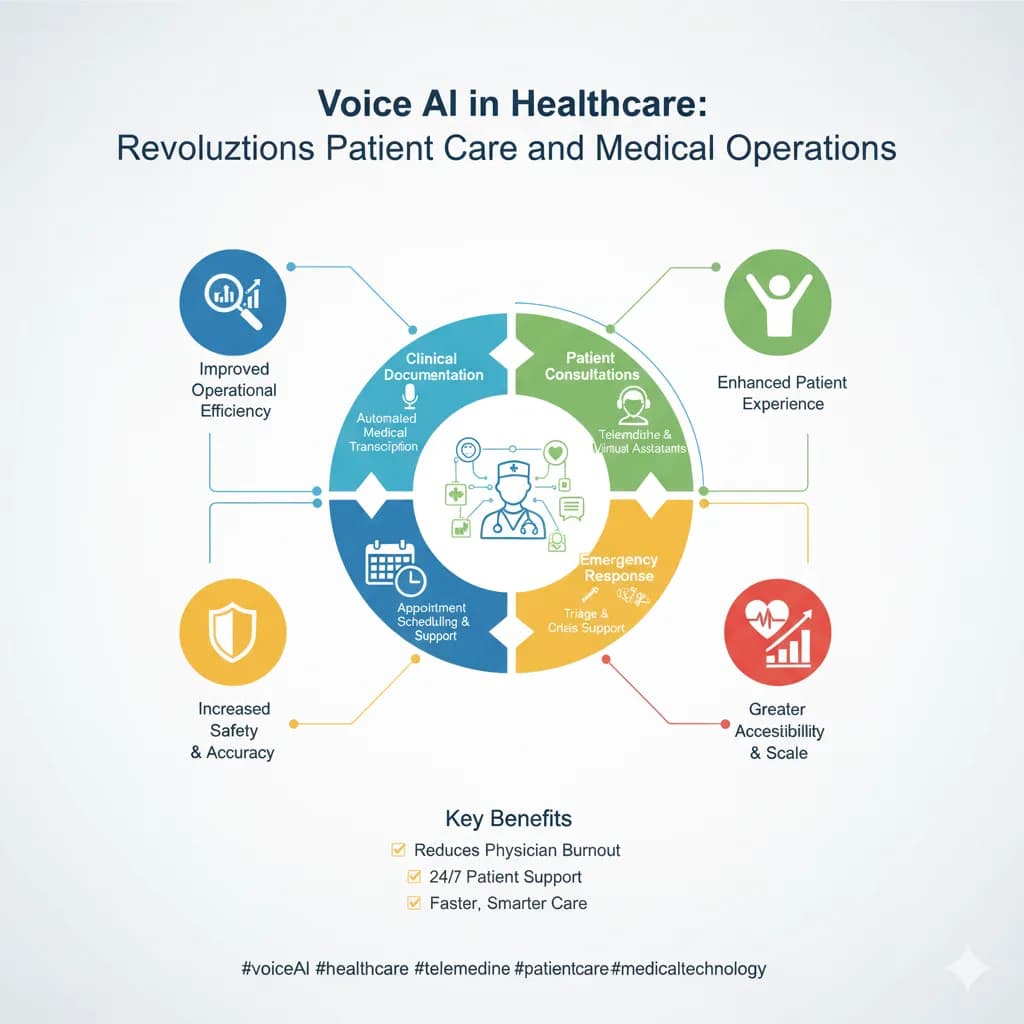
1. Clinical Documentation and EHR Management
Automated Medical Transcription Voice AI systems can transcribe patient encounters in real-time, allowing physicians to focus on patient care rather than typing. Advanced systems understand medical terminology, speak naturally about symptoms and treatments, and integrate seamlessly with Electronic Health Records (EHRs).
Benefits:
- Reduces documentation time by up to 70%
- Improves accuracy compared to manual entry
- Enables real-time updating of patient records
- Decreases physician burnout and improves job satisfaction
Real-World Impact: A large hospital system implemented voice AI for clinical documentation and saw a 25% increase in physician productivity, allowing them to see more patients while reducing overtime costs by $2.3 million annually.
2. Patient Consultations and Telemedicine
Virtual Health Assistants AI-powered voice assistants can conduct initial patient assessments, gather symptoms, and provide preliminary guidance. These systems are particularly valuable for:
- Triage and symptom assessment
- Medication adherence monitoring
- Post-operative care instructions
- Chronic disease management
Telemedicine Enhancement Voice AI improves telemedicine consultations by:
- Providing real-time language translation
- Transcribing conversations for medical records
- Analyzing speech patterns for health indicators
- Facilitating hands-free operation for physicians
3. Appointment Scheduling and Patient Services
Intelligent Scheduling Systems Voice AI can handle complex scheduling requirements, including:
- Multi-specialist appointment coordination
- Insurance verification and pre-authorization
- Reminder calls and rescheduling requests
- Integration with physician calendars and facility resources
Patient Support Services 24/7 voice AI systems provide:
- General health information and education
- Prescription refill requests
- Test result inquiries
- Insurance and billing questions
4. Emergency and Crisis Response
Emergency Triage Voice AI systems can:
- Assess emergency situations and provide immediate guidance
- Connect patients with appropriate emergency services
- Guide callers through life-saving procedures
- Coordinate with emergency response teams
Mental Health Support Voice AI provides:
- Crisis intervention and suicide prevention
- Mental health assessments and screening
- Therapeutic conversation and support
- Connection to mental health professionals
Specialized Healthcare Applications
Elderly Care and Assisted Living
Voice AI addresses unique challenges in elderly care:
Medication Management
- Voice-activated pill dispensers with reminders
- Drug interaction checking and alerts
- Pharmacy integration for refill automation
- Caregiver notifications for missed medications
Health Monitoring
- Daily health check-ins and vital sign collection
- Fall detection and emergency response
- Cognitive assessment and brain health monitoring
- Social interaction and companionship
Case Study: Smart Assisted Living A senior living facility implemented voice AI for resident care, resulting in a 40% reduction in medication errors, 60% faster emergency response times, and significantly improved resident satisfaction scores.
Chronic Disease Management
Diabetes Care Voice AI systems help diabetic patients by:
- Providing medication reminders and glucose monitoring prompts
- Offering nutritional guidance and meal planning
- Tracking symptoms and complications
- Facilitating communication with healthcare teams
Cardiovascular Health
- Blood pressure monitoring and trend analysis
- Exercise and diet recommendations
- Symptom tracking for heart conditions
- Medication adherence for cardiac medications
Mental Health
- Mood tracking and assessment
- Cognitive behavioral therapy exercises
- Crisis intervention and support
- Therapy session scheduling and reminders
Surgical and Procedural Support
Operating Room Applications Voice AI enhances surgical procedures through:
- Hands-free access to patient information and imaging
- Real-time surgical notes and documentation
- Equipment and supply requests
- Communication with surgical teams
Pre and Post-Operative Care
- Pre-surgical instruction delivery and verification
- Post-operative monitoring and check-ins
- Complication assessment and reporting
- Recovery timeline tracking
Benefits for Healthcare Stakeholders
For Patients
Improved Access
- 24/7 availability for health consultations
- Reduced travel time for routine appointments
- Language translation and accessibility features
- Faster response times for urgent needs
Better Experience
- Personalized health guidance and education
- Convenient appointment scheduling
- Reduced wait times for information
- Empowerment through health data access
Enhanced Safety
- Medication error reduction
- Early warning systems for health changes
- Emergency response capabilities
- Chronic disease monitoring and alerts
For Healthcare Providers
Operational Efficiency
- Reduced administrative burden
- Automated routine tasks and processes
- Improved resource allocation
- Streamlined workflow management
Clinical Benefits
- More time for patient interaction
- Access to comprehensive patient data
- Real-time decision support
- Improved documentation quality
Financial Impact
- Reduced operational costs
- Increased patient capacity
- Decreased staffing requirements for routine tasks
- Improved revenue cycle management
For Healthcare Systems
Scalability
- Ability to serve larger patient populations
- Consistent service quality across locations
- Rapid deployment of new services
- Flexible capacity management
Quality Improvement
- Standardized care protocols
- Continuous monitoring and optimization
- Data-driven insights for care improvement
- Reduced medical errors and adverse events
Implementation Challenges and Solutions
Technical Challenges
Speech Recognition Accuracy Challenge: Medical terminology and accents can reduce accuracy Solution: Custom training on medical vocabularies and diverse voice samples
Integration Complexity Challenge: Healthcare systems have complex, legacy infrastructure Solution: APIs and middleware for seamless EHR integration
Data Security and Privacy Challenge: HIPAA compliance and patient data protection Solution: End-to-end encryption, audit trails, and compliance frameworks
Adoption Challenges
Physician Resistance Challenge: Concerns about technology replacing human judgment Solution: Training programs emphasizing AI as a tool to enhance, not replace, clinical expertise
Patient Acceptance Challenge: Trust and comfort with AI for health decisions Solution: Gradual introduction, transparent communication, and always-available human backup
Regulatory Compliance Challenge: Meeting FDA and healthcare regulatory requirements Solution: Working with regulatory bodies and following established medical device pathways
Security and Privacy Considerations
HIPAA Compliance
Voice AI systems in healthcare must adhere to strict privacy regulations:
Data Encryption
- End-to-end encryption for all voice communications
- Secure storage of voice recordings and transcripts
- Encrypted transmission between systems
- Regular security audits and vulnerability assessments
Access Controls
- Role-based access to patient information
- Multi-factor authentication for system access
- Audit trails for all data access and modifications
- Automatic session timeouts and security monitoring
Patient Consent
- Clear consent processes for voice AI usage
- Opt-out options for patients who prefer human interaction
- Transparent data usage policies
- Patient control over their voice data
Ethical Considerations
Bias and Fairness Voice AI systems must be trained on diverse datasets to ensure equitable care for all patient populations, including different ethnicities, ages, and linguistic backgrounds.
Transparency Patients should understand when they're interacting with AI systems and have clear pathways to human care when needed.
Clinical Responsibility Healthcare providers remain ultimately responsible for patient care decisions, with AI serving as a supportive tool rather than a replacement for medical judgment.
Future Developments in Healthcare Voice AI
Advanced Capabilities
Emotional Intelligence Future voice AI systems will better detect and respond to patient emotions, providing more empathetic and personalized care.
Predictive Healthcare AI analysis of voice patterns may detect early signs of health conditions, enabling preventive interventions.
Multimodal Integration Combining voice with other data sources (wearables, lab results, imaging) for comprehensive health monitoring.
Emerging Applications
Precision Medicine Voice AI will help deliver personalized treatment recommendations based on individual patient characteristics and preferences.
Global Health Voice AI can extend healthcare access to underserved populations worldwide, providing basic health services and connecting patients with specialists.
Research and Drug Development Voice data can contribute to clinical research, helping identify treatment patterns and improve drug development processes.
ROI and Business Case for Healthcare Voice AI
Cost Savings
Administrative Efficiency
- 50-70% reduction in documentation time
- Decreased need for administrative staff
- Reduced overtime costs for healthcare workers
- Lower transcription and clerical expenses
Improved Capacity
- Increased patient volume without additional staff
- Reduced appointment cancellations and no-shows
- More efficient use of physician time
- Decreased length of stay through better monitoring
Revenue Enhancement
Patient Satisfaction
- Higher patient satisfaction scores improve reimbursement rates
- Reduced patient complaints and liability issues
- Increased patient loyalty and referrals
- Better online reviews and reputation
Quality Metrics
- Improved quality scores for value-based care programs
- Better chronic care management outcomes
- Reduced readmission rates
- Enhanced preventive care delivery
Implementation Costs
Initial Investment
- Software licensing and customization: $50,000-$500,000
- Integration and setup: $25,000-$200,000
- Training and change management: $10,000-$100,000
- Ongoing support and maintenance: $20,000-$150,000 annually
Typical ROI Timeline Most healthcare organizations see positive ROI within 12-18 months, with break-even often occurring within 6-12 months for high-volume implementations.
Best Practices for Healthcare Voice AI Implementation
1. Start with Clear Use Cases
Begin with well-defined, high-impact applications like appointment scheduling or basic patient information rather than complex clinical decision-making.
2. Ensure Regulatory Compliance
Work with legal and compliance teams from the beginning to ensure all implementations meet healthcare regulations and standards.
3. Prioritize User Experience
Design voice interactions that feel natural and helpful for both patients and healthcare providers.
4. Plan for Integration
Ensure voice AI systems can seamlessly integrate with existing EHRs, practice management systems, and clinical workflows.
5. Invest in Training
Provide comprehensive training for healthcare staff on how to work effectively with voice AI systems.
6. Monitor and Optimize
Continuously track performance metrics and gather feedback to improve system effectiveness over time.
Conclusion
Voice AI represents a transformative opportunity for healthcare, offering solutions to some of the industry's most pressing challenges while improving patient care and provider satisfaction. As the technology continues to mature and regulatory frameworks evolve, we can expect to see even more innovative applications that further revolutionize healthcare delivery.
The key to successful implementation lies in thoughtful planning, stakeholder engagement, and a commitment to maintaining the human element that is central to quality healthcare. Organizations that embrace voice AI strategically and responsibly will be well-positioned to deliver better care, improve operational efficiency, and thrive in the evolving healthcare landscape.
The future of healthcare is conversational, intelligent, and more accessible than ever before. Voice AI is not just a technological advancement—it's a pathway to more compassionate, efficient, and effective healthcare for all.
Interested in exploring how voice AI can transform your healthcare organization? Our healthcare specialists can help you develop a customized implementation strategy.to learn more.