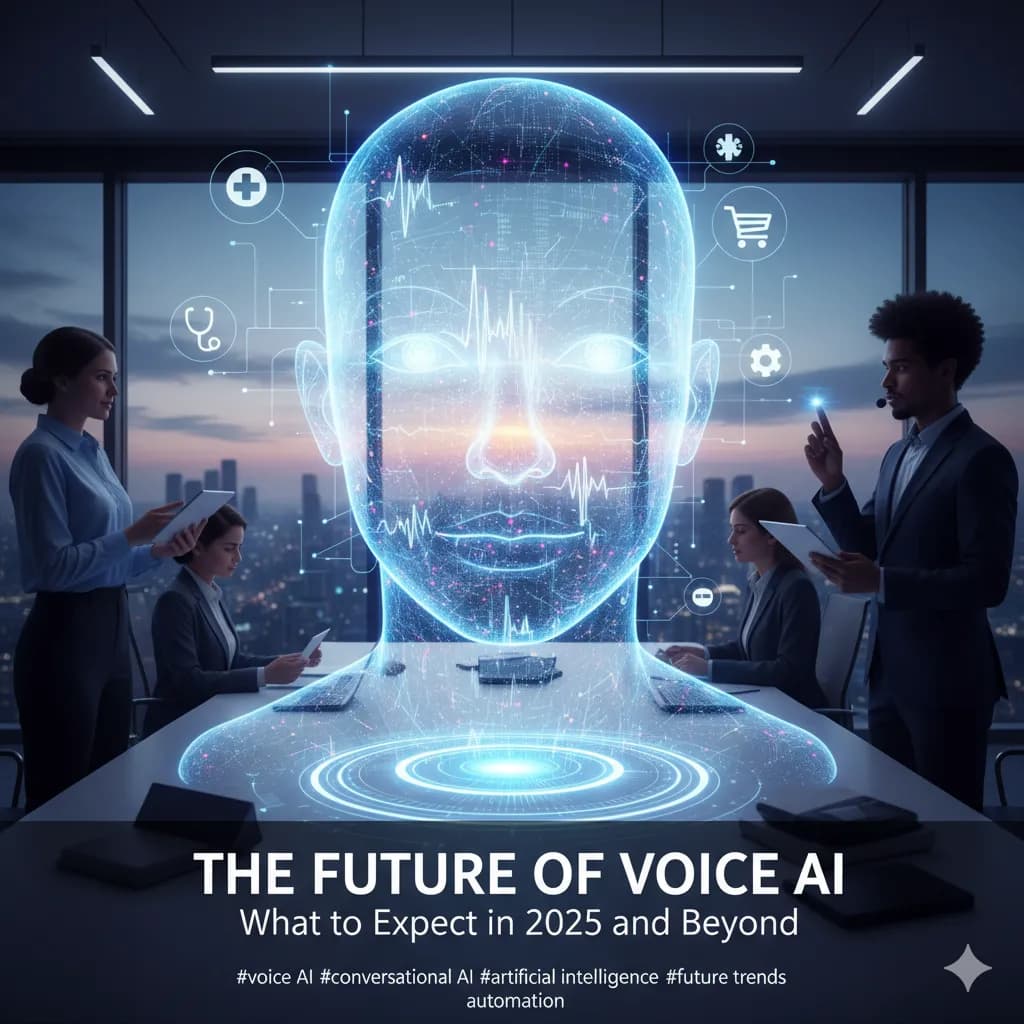
The Future of Voice AI: What to Expect in 2025 and Beyond
The landscape of voice artificial intelligence is evolving at breakneck speed, and we're on the cusp of a revolutionary transformation that will reshape how businesses interact with customers. As we look ahead to 2025 and beyond, the convergence of advanced natural language processing, emotional intelligence, and real-time processing capabilities promises to deliver voice experiences that are more human-like than ever before.
The Current State of Voice AI
Today's voice AI systems have already made significant strides beyond simple command recognition. Modern conversational AI platforms can handle complex multi-turn conversations, understand context, and even detect emotional nuances in human speech. However, we're just scratching the surface of what's possible.
Key Developments Driving Change
1. Enhanced Natural Language Understanding (NLU) The latest advances in transformer architectures and large language models have dramatically improved how AI systems comprehend and respond to human language. Voice AI can now understand implicit requests, handle ambiguous queries, and maintain context across extended conversations.
2. Real-Time Emotional Intelligence Modern voice AI systems are becoming increasingly sophisticated at detecting emotional states through vocal patterns, tone, and pace. This capability enables more empathetic and contextually appropriate responses.
3. Multilingual and Cultural Adaptation AI systems are becoming more adept at handling multiple languages within the same conversation and adapting to cultural communication styles, making them more effective for global businesses.
What's Coming in 2025
Hyper-Personalization at Scale
Voice AI systems will leverage vast amounts of interaction data to create highly personalized experiences for each user. Imagine calling customer support and having the AI instantly recognize not just your voice, but your communication style, preferences, and current emotional state.
Seamless Multi-Modal Integration
The future of voice AI isn't just about voice—it's about creating unified experiences that combine voice, visual, and text inputs seamlessly. Customers will be able to start a conversation on their phone, continue it on their laptop, and complete it through a smart speaker without losing context.
Proactive Customer Engagement
Instead of waiting for customers to reach out, AI systems will proactively identify opportunities to assist customers based on their behavior patterns and needs, reaching out with helpful suggestions or support before issues arise.
Industry-Specific Applications
Healthcare
Voice AI is revolutionizing healthcare by enabling hands-free documentation, patient monitoring, and telemedicine consultations. By 2025, we expect to see widespread adoption of voice-enabled medical assistants that can take patient histories, schedule appointments, and provide basic health guidance.
Financial Services
Banks and financial institutions are increasingly using voice AI for secure authentication, account management, and financial advisory services. The technology is becoming sophisticated enough to handle complex financial queries while maintaining strict security protocols.
E-commerce and Retail
Voice commerce is set to explode, with AI assistants becoming capable of understanding complex purchase intentions, providing product recommendations, and completing transactions through natural conversation.
Technical Innovations on the Horizon
Edge Computing for Voice AI
The shift towards edge computing will enable faster response times and improved privacy by processing voice data locally rather than in the cloud. This advancement will be crucial for applications requiring real-time responses.
Synthetic Voice Generation
Advances in voice synthesis technology will enable the creation of highly realistic, branded voices that can convey specific brand personalities while maintaining natural conversational flow.
Advanced Context Awareness
Future voice AI systems will maintain context not just within conversations, but across different touchpoints and over extended periods, creating truly continuous customer relationships.
Challenges and Considerations
Privacy and Security
As voice AI becomes more sophisticated, protecting user privacy and securing voice data becomes increasingly critical. Organizations will need to implement robust security measures and transparent data handling practices.
Ethical AI Development
The development of more human-like voice AI raises important ethical questions about transparency, consent, and the potential for manipulation. Companies must prioritize ethical AI development practices.
Technical Limitations
Despite rapid progress, voice AI still faces challenges in handling complex reasoning, maintaining very long-term context, and dealing with highly technical or specialized domains.
Preparing for the Voice AI Future
For Businesses
- Start with Clear Use Cases: Identify specific customer pain points that voice AI can address
- Invest in Data Quality: High-quality training data is crucial for effective voice AI systems
- Plan for Integration: Consider how voice AI will integrate with existing systems and workflows
- Focus on User Experience: Prioritize natural, helpful interactions over technical sophistication
For Developers
- Master Conversational Design: Learn to design conversations that feel natural and helpful
- Understand Voice UI Principles: Voice interfaces require different design principles than visual interfaces
- Stay Updated with AI Ethics: Understanding ethical AI development is becoming increasingly important
The Bottom Line
The future of voice AI is incredibly promising, with applications that will transform virtually every industry. As we move towards 2025, businesses that embrace this technology thoughtfully and strategically will gain significant competitive advantages.
The key to success lies not just in adopting the latest technology, but in understanding how to use it to create genuinely valuable experiences for customers. Voice AI isn't about replacing human interaction—it's about augmenting and enhancing it to create better outcomes for everyone involved.
As we stand on the brink of this voice AI revolution, one thing is clear: the future of customer interaction will be more conversational, more intelligent, and more human than ever before. The question isn't whether voice AI will transform your industry—it's how quickly you can adapt to leverage its power.
Ready to explore how voice AI can transform your business? Learn more about implementing cutting-edge voice AI solutions tailored to your specific needs.