How to Implement Voice AI in Customer Service: A Complete Guide
Implementing voice AI in customer service can transform your business operations, reduce costs, and significantly improve customer satisfaction. However, successful implementation requires careful planning, proper execution, and ongoing optimization.
This comprehensive guide will walk you through every step of the process, from initial planning to full deployment and beyond.
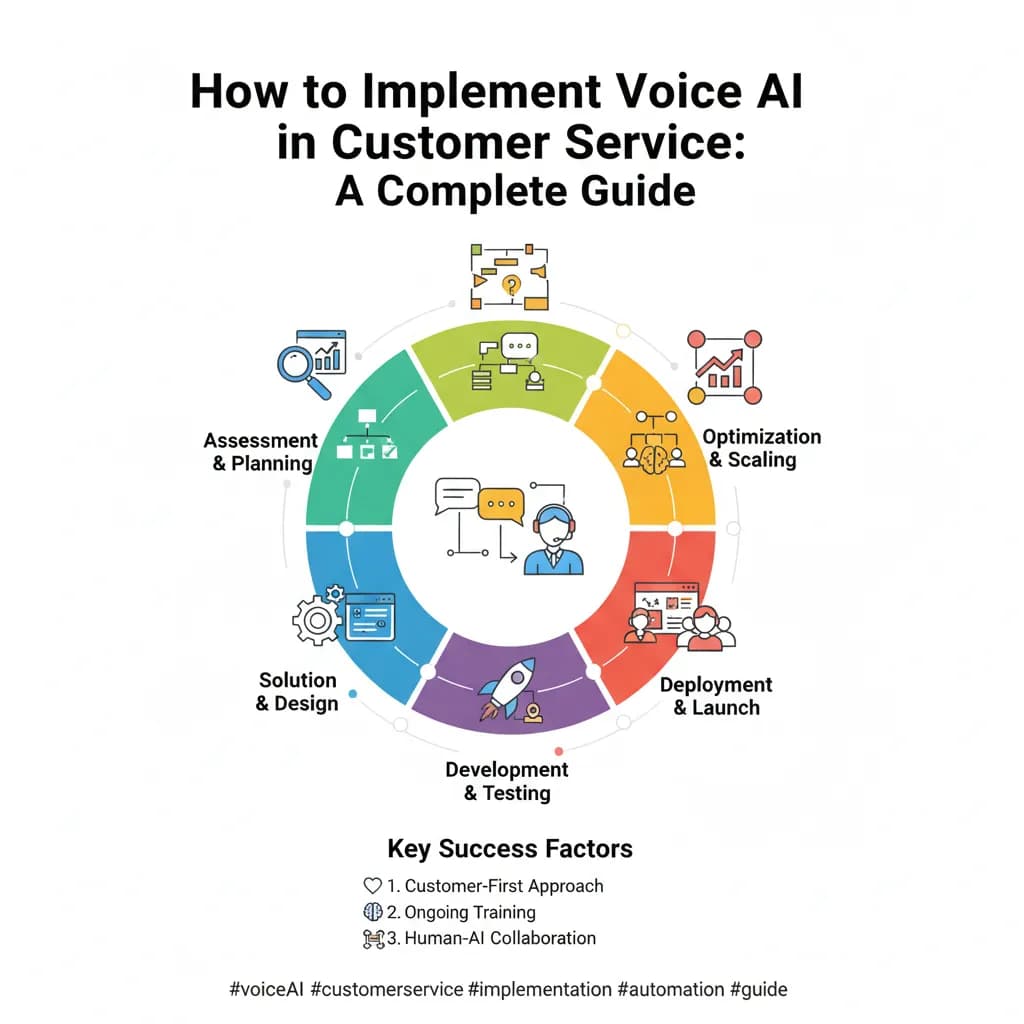
Phase 1: Assessment and Planning
1.1 Analyze Your Current Customer Service Operations
Before implementing voice AI, thoroughly understand your existing customer service landscape:
Call Volume Analysis
- Peak hours and seasonal variations
- Average handle time for different query types
- Common reasons for customer calls
- Agent productivity metrics
Customer Journey Mapping
- Identify touchpoints where customers currently call
- Understand customer expectations and pain points
- Map out typical conversation flows
- Document escalation paths
Technology Infrastructure Assessment
- Current telephony systems and capabilities
- CRM and ticketing system integrations
- Data storage and security requirements
- Bandwidth and server capacity
1.2 Define Clear Objectives
Establish specific, measurable goals for your voice AI implementation:
Operational Goals
- Reduce average wait times by X%
- Handle Y% of calls without human intervention
- Decrease operational costs by Z%
- Improve first-call resolution rates
Customer Experience Goals
- Achieve specific CSAT scores
- Reduce customer effort scores
- Increase 24/7 service availability
- Improve accessibility for diverse customer needs
Business Goals
- ROI targets and timeline
- Scalability requirements
- Competitive differentiation objectives
- Risk mitigation strategies
1.3 Choose the Right Use Cases
Start with high-impact, low-risk use cases:
Ideal Starting Points:
- Account balance inquiries
- Order status checks
- Appointment scheduling
- FAQ responses
- Basic troubleshooting
Avoid Initially:
- Complex technical support
- Sensitive financial transactions
- Emotional or crisis situations
- Highly regulated interactions
Phase 2: Solution Selection and Design
2.1 Evaluate Voice AI Platforms
Consider these key factors when selecting a platform:
Technical Capabilities
- Speech recognition accuracy for your customer demographic
- Natural language understanding sophistication
- Integration capabilities with existing systems
- Scalability and performance under load
Customization Options
- Ability to train on your specific terminology
- Voice personality and branding options
- Conversation flow design flexibility
- Custom integration development
Support and Reliability
- Vendor reputation and track record
- SLA guarantees and uptime commitments
- Technical support quality and availability
- Ongoing development and feature updates
2.2 Design Conversation Flows
Create detailed conversation maps for each use case:
Flow Design Principles
- Keep initial interactions simple and clear
- Provide easy exit routes to human agents
- Use confirmations for important actions
- Design for error recovery and clarification
Example Flow Structure:
1. Greeting and Intent Identification
   ↓
2. Authentication (if required)
   ↓
3. Information Gathering
   ↓
4. Processing and Response
   ↓
5. Confirmation and Next Steps
   ↓
6. Closing or Transfer
2.3 Integration Planning
Plan how voice AI will connect with your existing systems:
CRM Integration
- Customer data retrieval and updates
- Interaction logging and history
- Lead and case creation
- Follow-up scheduling
Business System Connections
- Inventory and order management systems
- Billing and payment platforms
- Knowledge bases and documentation
- Ticketing and workflow systems
Phase 3: Development and Testing
3.1 Development Process
Follow a structured development approach:
Sprint-Based Development
- Week 1-2: Core conversation flows
- Week 3-4: System integrations
- Week 5-6: Testing and refinement
- Week 7-8: Production preparation
Quality Assurance
- Unit testing for individual components
- Integration testing across systems
- Load testing for expected volume
- Security and compliance testing
3.2 Training the AI System
Prepare your voice AI for real-world interactions:
Data Collection
- Gather representative customer call recordings
- Create synthetic training scenarios
- Collect domain-specific terminology
- Document regional accent variations
Training Process
- Initial model training with baseline data
- Iterative improvement with additional data
- A/B testing of different approaches
- Continuous learning setup
3.3 Testing Strategies
Implement comprehensive testing before launch:
Internal Testing
- Employee testing across departments
- Stress testing with high call volumes
- Edge case and error condition testing
- Performance monitoring and optimization
Pilot Testing
- Limited customer group testing
- Specific time window pilots
- Feedback collection and analysis
- Rapid iteration based on results
Phase 4: Deployment and Launch
4.1 Soft Launch Strategy
Begin with a controlled rollout:
Gradual Rollout Plan
- Start with 10-20% of incoming calls
- Monitor performance metrics closely
- Gradually increase percentage based on success
- Maintain easy fallback to human agents
Monitoring Setup
- Real-time dashboard for key metrics
- Alert systems for performance issues
- Customer feedback collection mechanisms
- Agent oversight and intervention capabilities
4.2 Team Preparation
Prepare your team for the new system:
Agent Training
- Understanding when and how to take escalated calls
- Using new tools and interfaces
- Handling customer questions about the AI system
- Quality assurance and feedback processes
Management Training
- Monitoring and analytics interpretation
- Performance optimization techniques
- Escalation procedures and decision making
- ROI measurement and reporting
4.3 Customer Communication
Transparently communicate the changes to customers:
Communication Strategy
- Advance notice about new features
- Clear explanation of benefits
- Easy opt-out options if desired
- Feedback channels for improvement
Messaging Examples
- "We're introducing AI assistance to serve you faster"
- "You can always speak to a human agent by saying 'agent'"
- "Help us improve by sharing your feedback"
Phase 5: Optimization and Scaling
5.1 Performance Monitoring
Track key metrics and continuously improve:
Technical Metrics
- Speech recognition accuracy rates
- Intent classification success
- Response time and latency
- System uptime and reliability
Business Metrics
- Customer satisfaction scores
- First-call resolution rates
- Average handle time reduction
- Cost per interaction
Customer Experience Metrics
- Task completion rates
- Escalation rates to human agents
- Customer effort scores
- Repeat contact rates
5.2 Continuous Improvement
Implement ongoing optimization processes:
Data Analysis
- Regular review of conversation logs
- Identification of common failure points
- Analysis of customer feedback themes
- Performance trend monitoring
Iterative Enhancement
- Monthly conversation flow updates
- Quarterly major feature additions
- Ongoing training data incorporation
- Regular platform updates and patches
5.3 Scaling Strategies
Expand your voice AI capabilities over time:
Horizontal Scaling
- Add new use cases and interaction types
- Expand to additional customer segments
- Integrate with more business systems
- Support additional languages or regions
Vertical Scaling
- Handle more complex interactions
- Increase personalization capabilities
- Add predictive and proactive features
- Integrate with advanced analytics
Common Challenges and Solutions
Challenge 1: Low Adoption Rates
Solutions:
- Improve conversation design based on user feedback
- Enhance system capabilities for common use cases
- Provide clear value proposition to customers
- Offer incentives for using AI assistance
Challenge 2: High Error Rates
Solutions:
- Expand training data with real customer interactions
- Improve intent classification models
- Add more conversation paths and error handling
- Implement better context understanding
Challenge 3: Integration Difficulties
Solutions:
- Work closely with IT teams from the beginning
- Use standardized APIs and protocols
- Implement robust error handling and fallbacks
- Plan for system maintenance and updates
Challenge 4: Agent Resistance
Solutions:
- Involve agents in the design and testing process
- Provide comprehensive training and support
- Clearly communicate how AI enhances rather than replaces their role
- Recognize and reward successful collaboration with AI systems
Measuring Success
Key Performance Indicators (KPIs)
Track these essential metrics:
Operational Efficiency
- Call deflection rate: % of calls handled by AI
- Average handle time reduction
- First-call resolution improvement
- Agent productivity increase
Customer Experience
- Customer satisfaction (CSAT) scores
- Net Promoter Score (NPS) changes
- Customer effort score (CES) improvement
- Accessibility and inclusion metrics
Financial Impact
- Cost per interaction reduction
- Return on investment (ROI)
- Revenue impact from improved service
- Operational cost savings
Reporting and Analysis
Implement comprehensive reporting:
Daily Dashboards
- Real-time performance metrics
- Issue identification and alerts
- Volume and capacity monitoring
- Quality assurance indicators
Monthly Reviews
- Trend analysis and insights
- Customer feedback compilation
- Performance against goals
- Optimization recommendations
Quarterly Business Reviews
- ROI and business impact assessment
- Strategic planning for enhancements
- Competitive analysis and benchmarking
- Future roadmap planning
Best Practices for Long-Term Success
1. Maintain a Customer-First Approach
Always prioritize customer experience over operational efficiency. If the AI isn't serving customers well, it's not serving your business well.
2. Invest in Ongoing Training
Voice AI systems require continuous learning and improvement. Plan for ongoing investment in training data, model updates, and system enhancements.
3. Foster Human-AI Collaboration
Design your system to complement human agents rather than replace them. The best implementations create synergy between AI efficiency and human empathy.
4. Stay Agile and Responsive
Customer needs and technology capabilities evolve rapidly. Maintain flexibility to adapt your implementation as requirements change.
5. Build Internal Expertise
Develop internal capabilities for managing and optimizing voice AI systems. This reduces dependence on vendors and enables faster improvements.
Conclusion
Implementing voice AI in customer service is a journey, not a destination. Success requires careful planning, thoughtful execution, and ongoing commitment to improvement. By following this comprehensive guide and adapting it to your specific business needs, you can create a voice AI implementation that delivers real value for both your customers and your organization.
Remember, the goal isn't to replace human customer service entirely, but to create a more efficient, accessible, and satisfying customer experience that leverages the strengths of both AI and human agents.
Ready to start your voice AI implementation journey? Our experienced team can help you navigate every step of the process for a personalized consultation and implementation roadmap.